میزبانی cpanel رایگان در ابر هاست

ابر هاست یـکی از بهترینها و برترین سایت های ارائه دهنده هاست رایگان در ایران می باشد، که با استفاده از تجربه کاری که از قبل داشته آماده ارائه خدمات به صورت حرفه ای برای تمامی بازدیدکنندگان سایت خود میباشد.

امکانات هاست رایگان ابر هاست :
ثبت نام رایگان و فوری : http://www.abarhost.ir

ارائه 10000 مگابايت فضای رایگان
اهداي 100000 مگابايت ترافیک
( www.yourdomain.1qq.ir ) اختصاص ادرس وب سایت
نصب آنلاین سیستم های مدیریت محتوا
( Parked Domains ) اختصاص پنج عدد
( Addon Domains ) اختصاص پنج عدد
( SQL Databases ) اختصاص پنج عدد
( Email Accounts ) اختصاص پنج عدد
( FTP Accounts ) اختصاص پنج عدد
( Mailing Lists ) اختصاص پنج عدد
( Subdomains ) اختصاصی پنج عدد


ثبت نام رایگان و فوری : http://www.abarhost.ir

آزمايشگاه پردازش موازی پژوهشگاه هوافضا

 آزمايشگاه پردازش موازی پژوهشگاه هوافضا در سال 1382 با ساخت يک دستگاه رايانه موازی شامل يک سرور و 12 پردازنده شروع به کار کرده‎است. اين آزمايشگاه به تدريج توسعه يافته و  در حال حاضر يک مرکز محاسباتی برای ارائه خدمات محاسباتی به پژوهشگران پژوهشگاه هوافضا و ساير دانشگاه‎ها و مراکز تحقيقاتی محسوب می‎شود.

اهداف:

 به دليل پيچيدگی و حجم بالای محاسبات مورد نياز مسائل محاسباتی Glossary Link مهندسی هوافضا که عمدتاً مسائل واقعی هستند، انجام محاسبات و تحليل نتايج آنها روی رايانه‎های معمولی در عمل غيرممکن است. بنابراين توسعه سامانه‎های پردازش موازی يکی از راه‎کارهای متداول برای غلبه بر اين محدوديت پيشنهاد شده‎است. بر همين اساس پژوهشگاه هوافضا آزمايشگاه پردازش موازی را راه‎اندازی کرده‎است. اهداف اصلی اين آزمايشگاه عبارتند از:

-           ارائه خدمات محاسباتی در زمينه اجرای نرم‎افزارهای محاسبات مهندسی در زمينه‎های ديناميک سيالات محاسباتی، محاسبات اجزاء محدود سازه‎ای، محاسبات نانوتکنولوژی و ديناميک ملکولی

-           ارائه خدمات مشاوره‎ای برای نصب، راه‎اندازی سيستم‎های پردازش موازی

-           ارائه خدمات در زمينه ايجاد مراکز محاسباتی فوق سريع

-           حضور در طرح ابررايانش ملّی

تجهيزات موجود در آزمايشگاه:

 -             6 دستگاه سرور VX50   که در مجموع دارای 192 پردازنده هستند

-           تجهيزات شبکه infiniband   شامل سوئيچ و 6 عدد کارت

-           يک دستگاه رک و ملحقات

-           يک عدد سوئيچ kvm  

-           يک دستگاه نمايشگر قابل نصب در رک

-           بيش از 15 مورد نرم‎افزار تخصصی در زمينه‎های مختلف

سرفصل فعاليت‎ها:

-           نصب نرم‎افزارهای مورد نياز و انجام تنظيمات لازم برای پردازش موازی

-           ارائه خدمات آموزشی

-           توسعه کد‎ها وکتابخانه‎های محاسباتی موازی

زمينه‎های تحقيقاتی در آزمايشگاه:

-           معماری رايانه‎های موازی

-           موازی سازی و افزايش کارايي برنامه‎های موازی

-           انجام مطالعات آيروديناميک، سازه، کنترل و بهينه‎سازی

-           انجام مطالعات ديناميک‎ مولکولی و نانوتکنولوژی

دستاوردها:

-           همکاری در طراحی Glossary Link راکت کاوش

-           ارائه خدمات برای انجام يک مورد رساله دکترای تخصصی و سه مورد رساله کارشناسی ارشد

-           ارائه خدمات در راستای تهيه 5 مقاله برای مجلات و کنفرانس علمی

-           تهيه 4 گزارش فنّی

-           حضور در طرح ابررايانش ملّی

-           تهيه کتابخانه پردازش موازی ARI_MPI

خدمات‎دهی به خارج دانشگاه:

-           ارائه خدمات به دانشجويان دکترا و کارشناسی ارشد دانشگاه صنعتی اميرکبير

-           به‎روزرسانی سيستم پردازش موازی يکی از پژوهشکده‎های وزارت دفاع

راه‎اندازی سيستم پردازش موازی در دانشکده رياضی دانشگاه فردوسی مشهد


نشانی : تهران-  شهرك قدس (غرب)، خ ايران زمين، خ مهستان، بالاتر از كلانتري، خ پژوهشگاه هوافضا

صندوق پستي: 834-14668       

نشانی پایگاه اینترنتی: www.ari.ac.ir         

تلفكس: 88366030-021   

آشنایی با پردازش موازی و پردازش در GPU ها

امروزه پردازش موازی یکی از شاخه های پر اهمیت در علوم کامپیوتر محسوب میشه. اما پردازش موازی در درجه ی اول یعنی چه؟! چیزی که میتونم مثال بزنم مغزه انسانه! بله همین کامپیوتر آنالوگی که توی سر شماس از چندین هزار سال پیش بلد بوده که چجوری اینکارو انجام یده! خیلی ساده شما میتونین پردازش موازیو ببینید مثلا الآن همزمان میتونین ببینید حرف بزنید و خیلی کارای دیگرو میتونین همزمان انجام بدید. اما آیا واقعا تمام این پردازش های موازی از یک جنس اند؟ آیا همونطور که قسمت بینایی مغز شما پردازش میکنه همونطور هم یک ضرب سه در سه رو حساب میکنه؟ اگر تعداد عصب های پرده ی شبکیه ی شما فقط هزار عدد باشه یعنی ذهن شما داره یه ماتریسه ده در دهو یه صورت موازی محاسبه میکنه! اگر همینطوری عمل ضربم انجام میشد شما باید در یک چشم به هم زدن یک ضرب ده در ده رو حساب کنید!

        اگر به چند سال پیش برگردیم هیچ بحثی مربوط به پردازش موازی در رابطه با کامپیوترهای شخصی نبود. در صورتی که ابر رایانه ها به صورت عادی از این تکنولوژی بهره میبردند. در واقع با پیشرفت سریع پردازنده ها  هیچ نیازی برای اینکار احساس نمیشد. سرعت پردازنده ها آنقدر رو به افزایش بود که هیچ کس نمیتوانست تصور کند که به همان سرعتی که این پیشرفت صورت میگرفت به همان سرعت هم روزی متوقف خواهد شد و تنها دلیل آن هم یک چیز بود : حرارت. حرارتی باعث ظهور  فن هایی که شما روی CPU تون دارین شدند!* پس شرکت ها مجبور شدند روی به راه حل های دیگری بیاورند و دلیل اصلی آن هم یک چیز بود : رقابت! پس درواقع پردازش موازی یک توفیق اجباری در دنیای کامپیوترهای شخصی به حساب می آید. اما این حرکت که فقط از روی نا امیدی انجام شد به سرعت جایگاه خودش رو پیدا کرد. ایده ی ساده ای بود. برنامتون رو به دو یا چهار یا ... قسمت تقسیم کنید و سرعتتون چند برابر میشه! اما آیا واقعا این پردازش به معنای واقعی موازی است؟! CPU ها ساخته شده اند که عملیات بسیار پیچیده را در زمانی بسیار کم انجام دهند. عملیات پیچیده! آیا یک عملیات پیچیده رو همیشه میشه به دو قسمت یا بیشتر تقسیم کرد؟ زمانی میتوانید از این نوع پردازش استفاده کنید که بخواهید چند پردازش پیچیده یا یک پردازش پیچیده را چند بار به طور مستقل انجام بدید. این مسئله آنقدر آزار دهنده است که هنوز هم پس از سالها بسیاری از برنامه ها نمیتوانند از این نوع پردازش استفاده کنند! پس همچنان هم این نوع پردازش موازی یک نوع اقدام از روی نا امیدی به حساب می آید اما باز هم این اقدام راه جدیدی رو باز کرد این دید که پردازش موازی فقط مال کامپیوترهای غول آسا نیست!

        پردازش موازی به معنای واقعی یعنی اینکه شما بتونید تعداد زیادی از محاسبات رو همزمان انجام بدید. دقیقا همونطور که ابر رایانه ها برای سالیان دراز انجام می دادند. این رویه برای پردازش های موازی در رایانه های شخصی ،در کارت گرافیکی صورت می گیرد. اما چرا کارت گرافیکی به چنین چیزی احتیاج دارد؟ خب در واقع جواب این سوال در صفحه ی نمایشگر شما نهفته است! اگر کمی از نزدیکتر به صفحه ی نمایشگر خودتون نگاه کنید اون تصویر واضحی که از دور برای شما نمایان بود از بین خواهد رفت و یک تصویر نقطه نقطه ظاهر خواهد شد.(این رو روی iPhone 4 به بالا امتحان نکنید!) خب همونطور که حتما میدونید به این نقاط میگن : pixel . این پیکسل ها از چند پیکسل کوچکتر به نام sub pixel تشکیل شده اند که هر کدام از این پیکسل های کوچک قابلیت نمایش یک رنگ را دارند. وظیفه ی کارت گرافیکی شما محاسبه ی شدت رنگ تک تک این ریز پیکسل هاست. میبینید که ما با پردازش های بسیار ساده اما بسیار زیاد سر و کار داریم. اگر بخواهیم این عملیات را با CPU انجام دهیم باید به ترتیب از یک نقطه شروع کنیم و تمام نقاط را پردازش کنیم. مشابه این حالت رو میتونید زمانی که درایور کارت گرافیک خود را نصب نکرده اید مشاهده کنید. صفحه ی نمایشگر شما برای نشان دادن تصاویر ثابت هیچگونه لرزشی نخواهد داشت اما حتی اگر بخواهید یک پنجره ی ساده را جابه جا کنید CPU ی شما از پس این کار ساده  بر نخواهد آمد! پس اینجاست که بحث پردازنده ای مطرح می شود که بتواند تعداد زیادی از داده ها ی بسیار ساده را پردازش کند که خب ما رو میرسونه به GPU ها.

        GPU ها از تعداد نسبتا زیادی پردازنده ی بسیار ساده و کوچک که به اصطلاح به اونا thread میگیم ساخته میشوند. هر کدام از این thread ها میتونن یک ریز پیکسل رو در یک پالس ساعت پردازش کنند. اما آیا GPU ها از لحاظ سخت افزاری طراحی شده اند تا فقط رنگ ها را محاسبه کنند؟! مسلما نه! یک GPU از تعداد زیادی پردازنده ساخته شده که فقط جمع و تفریق بلدند! اما اینکه برای سالها پتانسیل نهفته ی این نوع پردازنده ها شناخته نشده بود تماما به دلیل مشکلات نرم افزاری بود. قبل از معرفی CUDA ، تعداد کمی از محققین به این پتانسیل روی آوردند اما به دلیل مشکلات بسیار زیاد راه به جایی نبردند. مهمترین مشکل پیش روی این افراد این بود که تنها راه برقراری ارتباط با کارت گرافیک از طریق نرم افزارهای خاصی مثل DirectX و OpenGL بود و این واسطه ها فقط و فقط مخصوص پیکسل ها ساخته شده بودند. پس شما اگر میخواستید دو عدد را با هم جمع کنید باید ابتدا اون هارو به دو رنگ تبدیل میکردید. سپس نتیجه ی تلاقی این دو رنگ را بدست می آوردید و اون رو دوباره به عدد برمیگردوندید. اما با معرفی CUDA اکثر مشکلات برطرف شد. CUDA یا Compute Unified Device Architecture یک تکنولوژی بسیار جدید است که در سال 2006 توسط شرکت nvidia به بازار عرضه شد. هدف اصلی این تکنولوژی این بود که تمامی مشکلات پیش روی برنامه نویسان را بردارد که تا حد بسیار زیادی باعث پیشرفت این عرصه شده است.

برای اطلاعات بیشتر رجوع کنید به :

en.wikipedia.org/wiki/GPU_computing

* در واقع این حرارت ناشی از نوع ساخت CPU ها و یا هر پردازنده ی دیگری می باشد برای اطلاعات بیشتر رجوع شود به en.wikipedia.org/wiki/Computer_cooling

ساخت ابرکامپيوترترين ابرکامپيوتر دنيا

ابرکامپيوتر K computer که به‌صورت مشترک توسط کمپاني فوجيتسو و موسسه تحقيقاتي RIKEN ساخته شده، موفق به کسب عنوان قدرتمندترين ابرکامپيوتر دنيا در ليست TOP500 شد.

به گزارش ايسنا، در ليست TOP500، رتبه‌ها و جزئيات 500 ابرکامپيوتر برتر دنيا اعلام مي شود. اين پروژه از سال 1993 آغاز شده است و اين ليست دو بار در سال (ژوئن و نوامبر) به روز و منتشر مي‌شود.

K computer هنوز در مرحله نيم ساخته قرار دارد و پيکربندي آن به طور مشترک توسط اين دو کمپاني در حال توسعه است. اين ابرکامپيوتر از 672 قفسه (computer rack) تشکيل شده است.

در پروژه TOP500 براي مقايسه عملکرد ابرکامپيوترها از برنامه تست LINPACK استفاده مي‌شود که سرعت پردازنده‌ها را بر اساس واحد petaflops اندازه مي‌گيرد و اين ابررايانه با کسب عملکرد 8162 پتافلاپس موفق شده است تا در صدر اين ليست جاي بگيرد.

علاوه بر اين، اين سيستم با درصد بازده محاسباتي 93درصد، از اين نظر نيز استاندارد بالايي را نشان داده است. از ماه ژوئن 2004 که يک ابرکامپيوتر ژاپني به نام "Earth Simulator” توانست رتبه اول را در ليست TOP500 کسب کند، اين اولين بار است که مجددا يک ابرکاپيوتر ژاپني ديگر موفق به کسب چنين افتخاري شده است.

گفتني است RIKEN، شريک سازنده اين ابرکامپيوتر با فوجيتسو درواقع يک موسسه تحقيقاتي ژاپني در زمينه علوم طبيعي است که در سال 1917 پايه گذاري شده است. بودجه سالانه اين موسسه 800 بيليون ين است که تماما توسط دولت ژاپن تامين مي‌شود و در حال حاضر 3000 دانشمند در آن مشغول به کارو در 7 کمپ در ژاپن مستقرند.

کمپاني فوجيتسو شرکتي پيشرو در ارايه راه حل‌هاي پيشرفته و حرفه‌يي به تجارت‌ها و کمپاني‌هايي است که بر پايه ICT در بازارهاي جهاني کار مي‌کنند. اين شرکت در حال حاضر در بيش از 70 کشور دنيا در حال فعاليت و داراي بيش از 170 هزار نيروي کار جهت حمايت و ارايه خدمات به مشتريان است.

فوجيتسو هم‌چنين جهت طراحي و توليد محصولات خود ترکيبي از متخصصان سيستم‌ها و خدمات IT و محصولات ارتباطي و محاسباتي را به وجود آورده است که اين ترکيب باعث مي شود کمپاني بتواند ارزش افزوده‌اي را از طريق محصولات با کيفيت به مشتريان خود ارايه کند.

منبع : http://www.tabnak.ir


پروژه ابررایانه، برگ زرینی در تقویم فناوری

مرکز پردازشهای فوق سریع دانشگاه صنعتی امیرکبیر به بهره برداری رسید و با توجه به اینکه 500 ابررایانه اول دنیا معرفی شده‌اند این ابررایانه کشورمان در رتبه 108 قویترین ابررایانه‌های دنیا قرار می‌گیرد. به این ترتیب نام ایران در زمره چند کشور قوی سازنده کامپیوترهای سریع ثبت شد.

به گزارش خبرنگار مهر، ابررایانه امیرکبیر با بیش از 20 سال تجربه در طراحی سیستم‌های کامپیوتری سریع و ابررایانه‌ها صبح امروز چهارشنبه افتتاح می‌شود. این پروژه با سرمایه گذاری معاونت علمی و فناوری ریاست جمهوری و دانشگاه صنعتی امیرکبیر از اوایل سال 88 آغاز شد. این سیستم با مشارکت دانشکده‌های برق و کامپیوتر این دانشگاه با مدیریت دکتر سیداحمد معتمدی و دکتر محمدکاظم اکبری طراحی و ساخته شده است.

این ابررایانه دارای ریزپردازنده‌ای با 288 عدد گره پردازشی با طراحی همگن و دارای بیش از 4 هزار و 600 هسته پردازشی است.

جمع قدرت محاسباتی این ابررایانه 89 میلیارد عملیات در ثانیه است که شامل 5 /42 ترافلاپس پردازنده‌های اصلی و 5 /46 ترافلاپس پرازنده‌های کمکی است.

با توجه به اینکه 500 ابررایانه اول دنیا معرفی شده‌اند این ابررایانه دانشگاه صنعتی امیرکبیر در رتبه 108 قوی‌ترین ابررایانه‌های دنیا قرار می‌گیرد. به این ترتیب نام ایران در زمره چند کشور قوی سازنده کامپیوترهای سریع در دنیا ثبت می‌شود چرا که این سیستم حتی بدون در نظر گرفتن پردازنده‌های کمکی نیز در بین 500 ابررایانه اول دنیا قرار خواهد گرفت.

شبکه ارتباطی این ابررایانه با سرعت 40 مگابیت در ثانیه عمل می‌کند و حجم حافظه اصلی آن به بیش از 9 ترابایت می‌رسد. ظرفیت ذخیره سازی فعلی آن نیز 160 ترابایت (هزار میلیارد بایت) است.

این ابررایانه قابلیت اتصال به شبکه ابررایانش ملی (گرید) را دارد و می‌تواند نظارت یکپارچه بر اجزای سخت افزاری و سخت افزاری داشته باشد.

این مرکز پردازش فوق سریع همچنین قابلیت ارائه خدمات به دانشگاه‌ها، مراکز تحقیقاتی و مراکز صنعتی کشور را دارد و در آینده نزدیک دامنه آن به کلیه مراکز علمی منطقه نیز گسترش می‌یابد.

این ابررایانه همچنین قادر است مسائل عملی و مهندسی را که نیاز به محاسبات قوی و پیچیده دارد حل کند به همین دلیل از آغاز طراحی این سیستم یک تیم متخصص بر روی پیاده سازی نرم افزارهای مورد نیاز مراکز عملی و دانشگاهی و همچنین بخش صنعت فعالیت می‌کنند به طوری که تا کنون بیش از 60 نرم افزار کاربردی مانند نرم افزارهای مهندسی، نرم افزارهای دینامیک مولکولی، نرم افزارهای ERPو CRN، نرم افزارهای RENDERINGو نرم افزارهای پایگاه داده‌ها بر روی این سیستم نصب شده است.

تفاوت ابررایانش دانشگاه صنعتی امیرکبیر و صنعتی اصفهان

* قدرت محاسباتی ابررایانه دانشگاه امیرکبیر 25 درصد قوی‌تراز دانشگاه صنعتی اصفهان است به گونه‌ای که قدرت پردازش در ابررایانه امیرکبیر 5/42 ترافلاپس و در ابررایانه دانشگاه صنعتی اصفهان 34 ترافلاپس است.

* تعداد گره‌های ابررایانه دانشگاه امیرکبیر 288 عدد را طراحی همگن ولی ابررایانه صنعتی اصفهان طراحی ناهمگن با تعریف کلاستر ناسازگار و باعث کاهش کارایی می‌شود.

* حجم حافظه اصلی ابررایانه امیرکبیر 216/9 ترابایت و در دانشگاه اصفهان 5/7 ترابایت است که سیستم امیرکبیر 22 درصد بیشتر از اصفهان است.

* ظرفیت ذخیره سازی فعلی سیستم امیرکبیر بیش از 160 ترابایت و در سیستم دانشگاه صنعتی اصفهان 30 ترابایت است.

* قدرت محاسباتی در سیستم دانشگاه صنعتی امیرکبیر با احتساب پردازشگر کمکی (GPU) برابر 163 ترافلاپس دقت ساده و 5/46 ترافلاپس دقت مضاعف است که این میزان در سیستم دانشگاه صنعتی اصفهان برابر 32 ترافلاپس دقت مضاعف یا ساده نامعلوم است. سیستم امیرکبیر در پردازشگر کمکی بیش از 45 درصد بیشتر از دانشگاه صنعتی اصفهان است.

* مجموع قدرت محاسباتی سیستم امیرکبیر 89 ترافلاپس و رتبه 108 جهانی و قدرت محاسباتی دانشگاه صنعتی اصفهان 66 ترافلاپس و در صورت همگون بودن رتبه 160 جهانی را کسب می‌کند. به عبارت دیگر قدرت پردازش سیستم امیرکبیر بیش از 34 درصد بیشتر از دانشگاه صنعتی اصفهان است.

* مدیریت سیستم امیرکبیر به صورت ابرمختلط (HIBRID CLUB) و از طریق پرتال تحت وب طراحی شده است.

* بهینه سازی منابع سیستم با استفاده از تکنولوژی مجازی سازی انجام می‌شود.

* سیستم دانشگاه امیرکبیر قابلیت اتصال به شبکه ابررایانش ملی را دارد.

* ابررایانه دانشگاه امیرکبیر امکان نظارت یکپارچه بر اجزای سخت افزاری و نرم افزاری را دارد. ضمن آنکه بیش از 60 نرم افزار کاربردی بر روی آن نصب شده است.

منبع : http://www.tabnak.ir


نخستين ابررايانه قابل انطباق جهان

نخستين ابررايانه قابل انطباق جهان

سريع‌ترين و قدرتمندترين ابررايانه جهان با نام Novo-G در دانشگاه فلوريداي ايالات متحده امريکا راه‌اندازي شد.

به گزارش «اعتماد»، قسمت اول نام اين ابررايانه از واژه‌اي لاتين به مفهوم «ايجاد تغيير» برگرفته شده و قسمت دوم آن از واژه Genesis به مفهوم قابل انطباق و به منظور شرح توانايي رايانه‌اي با توانايي بازسازماندهي مدارهاي داخلي براي انطباق با دستور ارائه شده انتخاب شده است.

«آلن جرج» پروفسور مرکز بنياد علوم ملي محاسبات رايانه‌اي قابل انطباق با عملکرد بالا در دانشگاه کاليفرنيا (NSF) معتقد است اين ابررايانه مي‌تواند با محدوده اطلاعات دريافت شده از ماهواره‌هاي فضايي تا ديگر ابررايانه‌ها در ارتباط بوده و پردازش آنها را بر عهده داشته باشد. به گفته وي Novo-G فناوري بسيار قدرتمند و در عين حال پيچيده است و به همين دليل نبايد امکان استفاده از چنين سيستمي تنها در انحصار متخصصان قرار گيرد.

به گفته متخصصان استفاده از رايانه‌هاي رايج براي پردازش حجم عظيمي از اطلاعات بدون توجه به نوع درخواست کاربر، نيازمند فضا و انرژي بسياري خواهد بود. در عين حال رايانه‌هاي خاص به گونه‌اي ساخته مي‌شوند تا تنها بتوانند وظايف ثابت و تعيين شده‌اي را به انجام برسانند و از هيچ انعطاف پذيري عملياتي برخوردار نيستند.

اما استفاده از رايانه‌هاي قابل انعطاف مي‌تواند بهترين عملکرد و نتيجه را در هر زمينه تحقيقاتي و پردازش اطلاعات به وجود آورد. اين به آن دليل است که اين رايانه‌ها مي‌توانند مدارهاي داخلي خود را مشابه آجرهاي بازي لگو بازسازماندهي کنند تا ساختار داخلي خود را با نياز موجود براي انجام دستور ارائه شده انطباق دهند.

سرعت عملياتي اين رايانه‌ها نسبت به رايانه‌هاي رايج 10 تا 100 بار سريع تر است در حالي که ميزان انرژي مورد استفاده آنها 10 بار کمتر از ديگر رايانه‌ها است. به گزارش مهر با وجود اينکه ابررايانه Novo-G عملکرد خود را به اثبات رسانده است رايانه‌هاي قابل انطباق در مرحله تحقيقاتي باقي مانده‌اند و استفاده از آنها براي بسياري از کاربران پيچيده و دشوار به شمار مي‌رود. يکي از اصلي ترين اهداف موسسه NSF بهبود دادن فناوري رايانه‌هاي قابل انطباق و افزايش ميزان دسترسي به اين رايانه‌ها براي کاربران مختلف اعلام شده است.

منبع : http://tabnak.ir


باز هم تأخير در پيچيده‌ترين پروژه تاريخ بشر

باز هم تأخير در پيچيده‌ترين پروژه تاريخ بشر

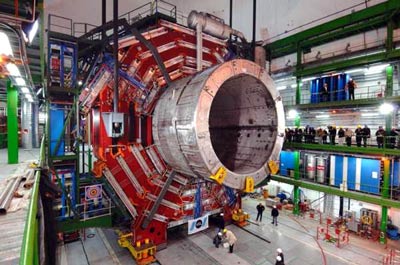
سرويس علمي تابناک ـ فعاليت شتاب‌دهنده هادروني بزرگ (ال.اچ.سي.) وابسته به مرکز سازمان اروپايي پژوهش‌هاي هسته‌اي موسوم به «سي.اي.آر.ان.» و يا «سرن»، بار ديگر شش هفته تأخير افتاد.

مرکز سرن اعلام کرد: برابر با برنامه زماني جديد، کار تعمير اين شتاب دهنده و نصب سيستم‌هاي امنيتي و مراقبتي بهتر تا پايان سپتامبر تمام خواهد شد و 20 ميليون يورو هزينه در برخواهد داشت.
آزمايش‌هاي قوي‌ترين شتاب دهنده جهان «ال.اچ.سي.» که عظيم‌ترين آزمايش‌هاي فيزيک و فيزيک ذرات در تاريخ بشر به شمار مي‌رود، دهم سپتامبر سال گذشته (2008) در ژنو آغاز شد، اما چند روز بعد به علت نقص فني اين شتاب‌دهنده، متوقف گرديد.
 
داغ شدن بيش از حد مغناطيس‌هاي (آهن ربا) قوي اين شتاب‌دهنده و نشت مقدار زيادي هليوم که براي سردکردن مغناطيس‌ها نياز است، از دلايل اين نقص فني است. مغناطيس‌ها قرار است ذرات پروتون تزريق شده به اين شتاب‌دهنده را در يک مدار خاص تحت کنترل داشته باشند.
مدار الکتريکي «ال.اچ.سي.» که ظاهرا داراي نقص فني است، باعث يک واکنش زنجيره‌اي در تمام اين شتاب دهنده شد و خسارات زيادي به آن وارد نمود.

هدف آزمايش‌هاي اين شتاب دهنده 27 کيلومتري، پاسخ به سوالات بزرگ فيزيک از طريق اصابت و برخورد پروتون‌ها با يکديگر با سرعتي نزديك به سرعت نور است.

اين شتاب دهنده که در منطقه مرزي فرانسه و سوئيس حدود 100 متر زير زمين قرار دارد، نتيجه کار دسته جمعي و تيمي هزاران پژوهشگر و دانشمند از سراسر جهان است.
طراحي و ساخت قطعات مهم يابنده‌هاي قوي و تحقق هريک از چهار آزمايش اين شتاب دهنده شامل «اطلس»، «آليس»، «سي.ام.اس.» و «ال.اچ.سي.بي.»، به عهده چندين دانشگاه و موسسه علمي بوده است.

شتاب دهنده «ال.اچ.سي.» بيش از 7 هزار تن وزن داشته و به عنوان دوربيني براي تصويربرداري و ثبت ذرات بنيادي به شمار مي‌رود و قوي‌ترين شتاب دهنده ذرات در تاريخ بشر است.
طراحي و ساخت اين شتاب دهنده با يک هزينه 3 ميليارد يورويي، 20 سال طول کشيد و فيزيکدانان معتقدند که پيچيده‌ترين پروژه در تاريخ بشر است.

با اين شتاب دهنده مي‌توان به عمق ميکروهستي و گيتي و ذرات نظر کرد و به جهان سابق و مهبانگ و پيدايش جهان نزديک‌تر شد. بيش از 10 هزار پژوهشگر و دانشمند قرار است در سال‌هاي آينده با اين شتاب دهنده آزمايش‌هاي خود را انجام دهند.

1232 مغناطيس‌هاي (آهن ربا) 15 متري، نگهداري ذرات روي محور شتاب دهنده را به عهده دارند. اين مغناطيس‌ها بايد تا منفي 271 درجه سانتيگراد خنک شوند تا بتوانند فعاليت ذراتي را محقق کنند که با سرعتي نزديك به سرعت نور بر روي محور شتاب دهنده در حرکت هستند.
اين ذرات، ميلياردها پروتون يعني هسته اتم‌هاي هيدروژن هستند و در ابعاد بسته کبريت، بسته بندي شده‌اند. نيمي از اين بسته‌ها در جهت حرکت عقربه ساعت و نيمي نيز در جهت عکس در حرکت هستند و اين ابرهاي پروتوني در برخي از نقاط با تمام قدرت با يکديگر اصابت مي‌کنند.

بر پايه برنامه فيزيکدانان، نخستين آزمايش‌هاي اصابت و برخورد ذرات در اين شتاب دهنده قرار است پايان اکتبر سال جاري انجام گيرد و پس از يک توقف کوتاه براي سرويس آن در پايان سال جاري، اين آزمايش‌ها تا پاييز سال 2010 ميلادي ادامه داشته باشد تا اطلاعات کافي براي اولين تجزيه و تحليل‌ها جمع آوري گردد.

ترجمه: مرتضي جواديان
منبع: سايت مرکز سرن

ابرکامپیوتر 20 پتافلاپي آمد

ابرکامپیوتر 20 پتافلاپي آمد

سازندگان ابرکامپیوترها سال‌هاست بر سر ساخت قوی‌ترین کامپیوتر جهان رقابت می‌کنند

ولی سرانجام شركت آي‌بي‌ام (IBM) در روز 15 بهمن، قوی‌ترین ابرکامپیوتر جهان به نام Sequoia را معرفی کرد. این ابرکامپیوتر 20 برابر قوی‌تر از کامپیوتر رکورددار قبلی است.

Sequoia توانایی انجام 20 کوادریلیون (1015) محاسبه در هر ثانیه (20 پتافلاپ) را خواهد داشت. این مقدار تقریباً معادل قدرت محاسبه بیش از 2 میلیون لپ‌تاپ ساده است.

بیش از 1.6 میلیون قطعه در این کامپیوتر، سرعتی به مراتب بالاتر از ابر کامپیوتر 1.1 پتافلاپی Blue Gene/L را به Sequoia می‌دهد.

این ابر کامپیوتر به سفارش وزارت انرژی آمریکا ساخته شده‌است و انتظار می‌رود که تا سال 2012 در لابراتوار ملی لاورنس لیورمور در کالیفرنیا نصب و راه‌اندازی شود. این لابراتوار بزگترین مرکز تحقیقات انرژی هسته‌ای، حفاظت از محیط زیست و مسائل اقتصادی مرتبط با انرژی است.

Sequioa به همراه کامپیوتر دیگری به نام Dawn در این لابراتوار برای شبیه سازی چرخه تولید انرژی از سوخت هسته‌ای مورد استفاده قرار می‌گیرد.

توانایی ابر کامپیوترها در رسیدن به سرعت‌های بسیار بالا مدیون استفاده از فن‌آوری‌های پیشرفته و ارزان توسط دانشمندان است. سرعت محاسبه یک تریلیون در هر ثانیه در علوم کامپیوتر به ترافلاپ (TeraFlop) معروف است و اولین کامپیوتری که رکورد این سرعت را شکست محصول سال 1996 می‌باشد.

دو سال پیش، کامپیوتر 59 میلیون دلاری ساخت شرکت سان مایکروسیستم به نام Constellation به سرعت 421 تریلیون محاسبه در هر ثانیه رسید.

شركت آي‌بي‌ام همچنین خبر داده‌است که نسل بعدی ابرکامپیوترها به محدوده سرعت اکسافلاپ (Exaflop) یا 1018 محاسبه در هر ثانیه خواهد رسید.

منبع : http://tabnak.ir


استاد ايراني دانشگاه واشنگتن ابررايانه‌اي استثنايي طراحي كرد

استاد ايراني دانشگاه واشنگتن ابررايانه‌اي استثنايي طراحي كرد

به گزارش بخش خبر شبكه فن آوري اطلاعات ايران، از ایسنا، اين ابررايانه منحصر به فرد در تحقيقات و برنامه‌هايي محاسبه‌يي كه مستلزم پردازش انبوهي گسترده از داده‌ها و اطلاعات است، استفاده خواهد شد.
دكتر شيرازي، رييس دانشكده مهندسي برق و علوم رايانه‌ دانشگاه واشنگتن در اين باره گفت: اين سيستم همچنين براي محققان در دانشگاه واشنگتن در دسترس خواهد بود و فرصت‌ها را براي همكاري‌هاي علمي و اكتشافي افزايش خواهد داد.
وي خاطر نشان كرد: اين سيستم اساسا يك معماري رايانه‌اي جديد براي حل مشكلات چالشي بزرگ ارائه مي‌كند.
شيرازي تاكيد كرد: ابررايانه XMT شركت جهاني CRAY يك كاتاليزور براي تقويت و گسترش همكاري بين محققان اين شركت، آزمايشگاه ملي نورث وست پاسيفيك و نيز محققان دانشگاه واشنگتن خواهد بود.
اين سيستم قرار است در سال 2008 تا سطح يك سيستم توليدي ارتقاء پيدا كند.
شركت ساخت ابررايانه‌هاي CRAY نيز در اين رابطه اعلام كرد كه XMT داراي يك معماري چند رشته‌يي گسترده و منحصر به فرد و حافظه بزرگ جهاني است و براي كاربردهايي طراحي شده كه مستلزم دسترسي به ترابيت‌هايي از داده‌هاي چيده شده در يك الگوي غيرقابل پيش‌بيني مانند كشف، هوش تجاري و تحليل‌هاي انرژي است.

گفتني است، دكتر شيرازي و همكارانش همچنين از سال گذشته با دريافت اعتباري پژوهشي بالغ بر 6/1 ميليون دلار از سازمان فضايي ناسا، تحقيقات گسترده‌اي را در خصوص طراحي و ساخت حسگرهاي جديد با قابليت بهره‌گيري در نقاطي همچون آتش‌فشان‌ها و همچنين سطح سياره مريخ آغاز كرده‌اند.
به گفته آن‌ها يكي از اهداف مهم اين پروژه طراحي الگوريتمي است تا ميزان مصرف انرژي به حداقل برسد.
از نكات مهم ديگر پروژه اين است كه قرار است تا از اين حسگرهاي ويژه طي يك هماهنگي جهاني با سيستم موقعيت ياب جهاني موسوم به (GPS) جهت دريافت اطلاعات دقيق رفتارهاي غير عادي در محيط‌هاي همچون آتش‌فشانها استفاده شود.
 
منبع : http://mhm20.blogfa.com/post-17.aspx
 

عرضه نخستين تراشه‌هاي شش هسته‌ای اينتل

عرضه نخستين تراشه‌هاي شش هسته‌ای اينتل

اينتل با به نمايش گذاشتن ريزپردازنده‌هاي چندهسته‌يي كه ضمن بالا بردن قدرت رايانش استفاده از برق را كاهش مي‌دهند، نخستين تراشه هاي شش هسته‌يي خود را عرضه كرد.

به گزارش ايسنا، اينتل و Advanced Micro Devices، شركت رقيب آن تراشه هاي دو و چهار هسته‌يي در بازار داشته‌اند.

طبق اظهار معاون گروه اينترپرايز اينتل، تراشه‌ي شش هسته‌يي 50 درصد كارآمدي بيش‌تر نسبت به مدل‌هاي چهار هسته‌يي داشته و در عين حال 10 درصد كمتر برق مصرف مي‌كنند؛ هزينه‌هاي برق و خنك‌سازي تقريبا نيمي از هزينه‌هاي اداره‌ي سرورهاي رايانه‌يي شركت‌ها محسوب مي‌شوند.

تراشه‌هاي چندهسته‌يي معروف به مولتي كور براي گرايش‌هاي رايانشي از جمله مشاهده‌ي ويديوي كيفيت بالاي آنلاين، سرويس‌هاي كاربردي كه شركت‌ها در اينترنت عرضه مي‌كنند و سرورهايي كه دستگاه‌هاي مجازي زيادي برروي آن‌ها كار مي‌كنند، بسيار مفيد هستند.

تراشه‌هاي چندهسته‌يي به رايانه‌ها امكان مي‌دهند همزمان به پردازش وظايف متعددي بپردازند؛ تراشه‌ي Xeon 7400 جديد در سرورهاي ويژه‌ي شبكه‌هاي سازماني شركت‌هاي دل، هيولت پاكارد، آي بي ام، يوني سيس و فوجيتسو به كار خواهد رفت.

منبع : http://www.tabnak.ir


مراحل ایجاد یک برنامه client/server در دلفی

مراحل ایجاد یک برنامه client/server در دلفی

بسمه تعالی
مراحل ایجاد یک برنامه clint/server
توضیح : خیلی از عزیزان برای شبکه کردن indy را توصیه می کنند . درست است INDY برای ارسال پیام در شبکه و ایمیل و ... مناسب است ولی برای بانکهای اطلاعاتی درد سر بسیار دارد . در این ثال از datasnap استفاده شده که کار را بسیار راحت می کند .

الف : برنامه سرور
1-یک پروژه جدید باز کنید و با عنوان سرور ذخیره نمایید
2- به قسمت file / new / other/multitier رفته و بر روی remote data server کلیک نمایید
3- حال یک پنجره با عنوان remote data module wizard ایجاد می شود که در قسمت CoClass Name یک نام برای سرور انتخاب نمایید . و به قسمتهای دیگر کاری نداشته باشید و ok را بزنید .
4- بلافاصله یک datamodule جدید با نام سرور (نامی که در قسمت class name انتخاب نمودید ) ایجاد می شود .
5- حال با استفاده از ado یا bde یا ... به با نک اطلاعاتی وصل شوید . مثلا با adoquery به یک جدول از یک بانک اطلاعاتی sql server وصل شده . حال adoqueryr را فعال سازید تا ارتباط برقرار شود . در پنجره مشخصات adoquery خاصیت active را true نمایید .
6- در قسمت dataacess یک DataSetProvider1 را بر روی datamoule که ایجاد کرده ایم قرار می دهیم و روی dataset در پنجره مشخصات کلیک نموده تا نام ارتباط بانک اطلاعاتی نمایان شود ( adoquer در مثال بالا)
7- پس از اطمینال از اتصال صحیح با نک اطلاعاتی پروژه را ذخیره و یک بار اجرا نمایید تا سرور در شبکه ثبت شود .
8- توجه داشته باشید که برنامه سرور فقط محل نگهداری بانک اطلاعاتی و کنترل اتصالات و کاربران است . پس کار دیگری را انجام نمی دهیم و حال فایل اجرایی برنامه سرور را اجرا می کنم.

ب نوشتن برنامه کلاینت
1- یک پروژه جدید با عنوان کلاینت ایجاد نموده و ذخیره نمایید .
2- در روی فرم از قسمت datasnap یک SocketConnection1 را روی فرم قرار داه . در قسمت adress نام ip کامپیوتر سرور را وارد نمایید.(مثلا ip سرور در برنامه محل کار من 10.20.1.93 است ) . اگر ای پی سرور را نمی دانید می توانید نام کامپیوتر سرور را وارد کنید .حال در قسمت servername نام سروری را که در برنامه سرور ثبت کرده اید را انتخاب نمایید . اگه پیام خطا داده احتمالا در تنظیمات شبکه یا خود شبکه ایراد است . وقتی نام سرور را نتخاب کردید گزینه conecct از مشخصات SocketConnection1 vh را true کنید . اگر true شد یعنی ارتنباط با سرور بر قرا است .
3- حال در قسمت datascess یک ClientDataSet1 بر روی فرم قرار داده و تنظیمات زیر را انجام دهید
A: در قسمت remote server کلیک نمایید تا نام socketConnection1 ظاهر شود .
b: در قسمت provider name کلیک کنید تا نام DataSetProvider1 ظاهر شود
c:حال خاصیت active را true کنید .
4- حال از قسمت dataascess یک datasource1 بر روی فرم قرار دهید و خاصیت datadet آن را با نام clientdataset1ظاهر شود .
5- حال از قسمت data control یک datagrid روی فرم قرار داده و خاصیت datasource آن رو datasource 1 انتخاب کنید . می بینید که اطلاعات سرور نمایش داده می شود .

توضیحات . چون ما از SocketConnection2 استفاده می کنیدم که بر اساس tcp/ip عمل می کنید (پشتیبانی سوکت ها ) باید برنامه فعال سوکت ها فعال شود . برای این کار مرحل زیر را انجام دهید
1- در قسمت run ویندوز دستور cmd را تایپ نمایید .
2- پس از ورود به محیط cmd دستور مقابل را تایپ نمایید scktsrvr - install .

توضیح 2 : فرض بر این است که کلیه خوانندگان عزیز با بانک اطلاعتی و ارتباط با ان آشنایی دارند . اگر می خواهید به نتیجه برسید نامگذاری اشیاعی که بر روی فرم ها و ... می گذارید عین مثال باشد .
امیدوارم مورد استفاده قرار گرفته باشد .

منبع : http://delphi-7.blogfa.com


ساخت سریع ترین رایانه جهان در آمریکا

ساخت سریع ترین رایانه جهان در آمریکا

دانشمندان آمریکایی در آزمایشگاه دولتی اسلحه «لوس آلاموس»، موفق به ساخت پر شتاب ترین کامپیوتر جهان موسوم به «رودرانر» شده‌اند.

به گزارش سرویس علم و فن آوری آفتاب، این رایانه توانایی انجام 1000 تریلیون عملیات در ثانیه را داراست.

دانشکده انرژی موسسه IBM روز دوشنبه با اعلام این خبر افزود که این کامپیوتر قرار است برای یاری به برنامه ملی جمع آوری سلاح های هسته ای مورد استفاده قرار گیرد.

«سمیوئل بادمن» سخنگوی دانشکده انرژی در این باره اظهار داشت: « این کامپیوتر موسوم به رودرانر ( roadrunner )همچنین قرار است برای یافتن پاسخ برای مشکلات انرژی جهانی و گشودن درهای تازه به سوی دانش در پژوهش های بنیادی به کار گرفته شود.

منبع : http://www.aftabnews.ir/vdcdk50ytx095.html


Using DRMAA with Unicluster Express

Using DRMAA with Unicluster Express

code_000000237891Small.jpgDistributed Resource Management Application API (DRMAA) is a high-level API that allows Grid applications to submit, monitor and control jobs to one or more DRM systems. Grid Engine comes with support for C/C++ and java, and one can also download bindings for ruby and python. There is also a nice collection of HowTos that should provide a great start for anyone looking to start writing DRMAA applications. The latest version of Unicluster Express (UCE) bundles Grid Engine 6.1u3, which is installed under $GLOBUS_LOCATION/sge. The $GLOBUS_LOCATION refers to the UCE installation directory (/usr/local/unicluster by default), and all of the DRMAA libraries and java files are located in the $GLOBUS_LOCATION/sge/lib directory. In order to run DRMAA applications, one has to set $LD_LIBRARY_PATH to point to the appropriate (architecture dependent) directory. For my development (64-bit linux) cluster with default UCE installation I used the following setup:

$ source /usr/local/unicluster/unicluster-user-env.sh
$ export LD_LIBRARY_PATH=/usr/local/unicluster/sge/lib/lx24-amd64
$ export JAVA_HOME=/opt/jdk
$ export PATH=$JAVA_HOME/bin:$PATH

A very simple example of a java DRMAA application that submits a job to Grid Engine is shown below:

$ cat SimpleJob.java 
import org.ggf.drmaa.DrmaaException;
import org.ggf.drmaa.JobTemplate;
import org.ggf.drmaa.Session;
import org.ggf.drmaa.SessionFactory;
public class SimpleJob {
  public static void main(String[] args) {
    SessionFactory factory = SessionFactory.getFactory();
    Session session = factory.getSession();
    try {
      session.init("");
      JobTemplate jt = session.createJobTemplate();
      jt.setRemoteCommand("/home/veseli/simple_job.sh");
      String id = session.runJob(jt);
      System.out.println("Your job has been submitted with id " + id);
    } 
    catch (DrmaaException e) {
      System.out.println("Error: " + e.getMessage());
    }
  }
}

One can compile and run the above example using something like the following:

$ javac -classpath /usr/local/unicluster/sge/lib/drmaa.jar SimpleJob.java 
$ java -classpath .:/usr/local/unicluster/sge/lib/drmaa.jar SimpleJob
Your job has been submitted with id 14
$ qstat -f 
queuename                      qtype used/tot. load_avg arch          states
----------------------------------------------------------------------------
all.q@horatio.psvm.univa.com   BP    1/1       0.36     lx24-amd64  
14 0.55500 simple_job veseli       r     06/20/2008 12:24:59     	1          
----------------------------------------------------------------------------
all.q@romeo.psvm.univa.com     BP    0/1       0.39     lx24-amd64    
----------------------------------------------------------------------------
all.q@yorick.psvm.univa.com    BP    0/1       0.45     lx24-amd64    
----------------------------------------------------------------------------
headnodes.q@petruchio.psvm.uni IP    0/1       0.15     lx24-amd64    
----------------------------------------------------------------------------
special.q@horatio.psvm.univa.c BIP   0/1       0.36     lx24-amd64    

I should point out that DRMAA is designed to be independent of any particular DRM. Those users that need job submission features or flags specific to Grid Engine can either use the “native specification” attribute, or they can use the “job category” attribute together with “qtask” files. In order to set native specification attribute in java one would use setNativeSpecification() method of the JobTemplate class (before the job submission line in the code):

jt.setNativeSpecification("-q special.q");

This method, however, makes your application dependent on the specific DRM you are working with at the moment. The above line will be interpreted correctly by Grid Engine, but may not be understood by other DRMs. In most cases a better solution is to use the job category attribute instead, and specify the DRM-dependent flags in the qtask file. For example, in order to submit your job to a particular Grid Engine queue in the java code one would have something like

jt.setJobCategory("special");

and use the qtask file to translate the “special” job category into appropriate Grid Engine flags:

$ cat ~/.qtask
special -q special.q

The cluster global qtask file (defines cluster wide defaults) in UCE resides at $GLOBUS_LOCATION/sge/default/common/qtask. As shown above, user-specific qtask files that override and enhance cluster-wide definitions are found at ~/.qtask.

منبع : http://gridgurus.typepad.com


Aromatic Clouds

Aromatic Clouds?

conference_000003749151XSmall.jpg

If you weren’t at OSGC you missed a number of interesting presentations. From my perspective, one of the most intriguing technologies was EUCALYPTUS: Elastic Utility Computing Architecture for Linking Your Programs To Useful Systems.

Before I go on, I would like you to notice that anybody who is able to make an acronym out of eucalyptus has some time on their hands. Fortunately, they used this time to implement an open-source infrastructure for Elastic Computing. In particular, the goal of the project is to, "foster community research and development of Elastic/Utility/Cloud service implementation technologies, resource allocation strategies, service level agreement (SLA) mechanisms and policies, and usage models."

In my opinion, the most interesting facets of this project are:

  • It is compatible with the Amazon EC2 tools out of the box yet it is agnostic and thus is capable of supporting any number of client interfaces;
  • Any team can assemble a development environment for tools that they wish to deploy to the EC2 Cloud;
  • A group could create their own Cloud system which could use EC2 for Utility computing resources;
  • It is the first step towards creating an open-standard for Cloud computing.

My hope is that this project will not only get us all thinking about what we really need from a Cloud but also what we could improve... I plan to start working with this software as soon as it is available later this month.

منبع : http://gridgurus.typepad.com


ابر رايانه به تشخيص پوکي استخوان کمک مي کند

ابر رايانه به تشخيص پوکي استخوان کمک مي کند
 
تهران-خبرگزاری جمهوری اسلامی (ایرنا): دانشمندان سوييسي از دستاورد جديدي در شبيه سازي ابر رايانه اي خبر دادند که مي تواند تا اندازه زيادي به تشخيص و درمان پوکي استخوان کمک کند.

به گزارش خبرگزاري يونايتدپرس، در حاليکه پوکي يا کاهش تراکم استخوان همراه با افزايش خطر شکستگي معمولا در مراحل پيشرفته تشخيص داده مي شود، محققان "موسسه فناوري سوييس" و " آزمايشگاه تحقيقاتي IBM زوريخ" گفتند، تنها در چند دقيقه جامع ترين شبيه سازي ساختارهاي استخواني انسان را نشان دادند.
دانشمندان گفتند که دستاورد آنها مي تواند به ساخت ابزارهاي باليني بهتري براي تشخيص و درمان عارضه پوکي استخوان منجر شود که شايع ترين بيماري استخواني است .
IBM همچنين در بيانيه اي اعلام کرد: با اين شبيه سازي ها محققان مي توانند نوعي "نقشه حرارتي " پويا از استحکام استخوان تهيه کنند که دقيقا نشان مي دهد کجا ساختار استخوان آسيب مي بيند و احتمالا چه باري موجب شکستگي مي شود.
برپايه اين بيانيه، از چنين شبيه سازي هاي قوي مي توان مرتب در توموگرافي هاي آتي رايانه اي استفاده کرد و اين شبيه سازي ها توانايي پزشکان را براي تجزيه و تحليل خطر شکستگي ها افزايش مي دهد و از اين رو موجب بهبود درمان مي شود.


About Grid Engine Advanced Reservations

About Grid Engine Advanced Reservations

code_000000237891Small.jpgAdvanced reservation (AR) capability is one of the most important new features of the upcoming Grid Engine 6.2 release. New command line utilities allow users and administrators to submit resource reservations (qrsub), view granted reservations (qrstat), or delete reservations (qrdel). Also, some of the existing commands are getting new switches. For example, the “-ar “ option for qsub indicates that the submitted job is a part of an existing advanced reservation. Given that AR is a new functionality, I thought that it might be useful to describe how it works on a simple example (using 6.2 Beta software). Advanced resource reservations can be submitted to Grid Engine by queue operators and managers, and also by a designated set of privileged users. Those users are defined in ACL “arusers”, which by default looks as follows:

$ qconf -sul
arusers
deadlineusers
defaultdepartment
$ qconf -su arusers
name    arusers
type    ACL
fshare  0
oticket 0
entries NONE

The “arusers” ACL can be modified via the “qconf -mu” command:

$ qconf -mu arusers
veseli@tolkien.ps.uud.com modified "arusers" in userset list
$ qconf -su arusers
name    arusers
type    ACL
fshare  0
oticket 0
entries veseli

Once designated as a member of this list, the user is allowed to submit ARs to Grid Engine:

[veseli@tolkien]$ qrsub -e 0805141450.33 -pe mpi 2
Your advance reservation 3 has been granted
[veseli@tolkien]$ qrstat
ar-id   name       owner        state start at             end at               duration
-----------------------------------------------------------------------------------------
      3            veseli       r     05/14/2008 14:33:08  05/14/2008 14:50:33  00:17:25
[veseli@tolkien]$ qstat -f 
queuename                      qtype resv/used/tot. load_avg arch          states
---------------------------------------------------------------------------------
all.q@tolkien.ps.uud.com       BIP   2/0/4          0.04     lx24-x86      

For the sake of simplicity, in the above example we have a single queue (all.q) that has 4 job slots and a parallel environment (PE) mpi assigned to it. After reserving 2 slots for the mpi PE, there are only 2 slots left for running regular jobs until the above shown AR expires. Note that the "–e" switch for qrsub designates requested reservation end time in the format YYMMDDhhmm.ss. It is also worth pointing out that the qstat output changed slightly with respect to previous software releases in order to accommodate display of existing reservations. If we now submit several regular jobs, only 2 of them will be able to run:

[veseli@tolkien]$ qsub regular_job.sh 
Your job 15 ("regular_job.sh") has been submitted
...
[veseli@tolkien]$ qsub regular_job.sh 
Your job 19 ("regular_job.sh") has been submitted
[veseli@tolkien]$ qstat -f
queuename                      qtype resv/used/tot. load_avg arch          states
---------------------------------------------------------------------------------
all.q@tolkien.ps.uud.com       BIP   2/2/4          0.03     lx24-x86      
     15 0.55500 regular_jo veseli       r     05/14/2008 14:34:32     1        
     16 0.55500 regular_jo veseli       r     05/14/2008 14:34:32     1        
############################################################################
 - PENDING JOBS - PENDING JOBS - PENDING JOBS - PENDING JOBS - PENDING JOBS
############################################################################
     17 0.55500 regular_jo veseli       qw    05/14/2008 14:34:22     1        
     18 0.55500 regular_jo veseli       qw    05/14/2008 14:34:23     1        
     19 0.55500 regular_jo veseli       qw    05/14/2008 14:34:24     1        

However, if we submit jobs that are part of the existing AR, those are allowed to run, while jobs submitted earlier are still pending:

[veseli@tolkien]$ qsub -ar 3 reserved_job.sh 
Your job 20 ("reserved_job.sh") has been submitted
[veseli@tolkien]$ qsub -ar 3 reserved_job.sh 
Your job 21 ("reserved_job.sh") has been submitted
[veseli@tolkien]$ qstat -f
queuename                      qtype resv/used/tot. load_avg arch          states
---------------------------------------------------------------------------------
all.q@tolkien.ps.uud.com       BIP   2/4/4          0.02     lx24-x86      
     15 0.55500 regular_jo veseli       r     05/14/2008 14:34:32     1        
     16 0.55500 regular_jo veseli       r     05/14/2008 14:34:32     1        
     20 0.55500 reserved_j veseli       r     05/14/2008 14:35:02     1        
     21 0.55500 reserved_j veseli       r     05/14/2008 14:35:02     1        
############################################################################
 - PENDING JOBS - PENDING JOBS - PENDING JOBS - PENDING JOBS - PENDING JOBS
############################################################################
     17 0.55500 regular_jo veseli       qw    05/14/2008 14:34:22     1        
     18 0.55500 regular_jo veseli       qw    05/14/2008 14:34:23     1        
     19 0.55500 regular_jo veseli       qw    05/14/2008 14:34:24     1        

The above example illustrates how ARs work. As long as particular reservation is valid, only jobs that are designated as part of it can utilize resources that have been reserved. I think that AR will prove to be extremely valuable tool for planning grid resource usage, and I’m very pleased to see it in the new Grid Engine release.

منبع : http://gridgurus.typepad.com


Steaming Java

Steaming Java

code_000000237891Small.jpg

When Rich asked us to walk through a software development process, I immediately thought back to a conversation that I had with my friend Leif Wickland about building high-performance Java applications. So I immediately emailed him asking him for his best practices. We have both produced code that is as fast, if not faster than C compiled with optimization (for me it was using a 64-bit JRE on a x86_64 architecture with multiple cores).

That is not to say that if you were to spend time optimizing the equivalent C-code that it would not be made to go faster. Rather, the main point is that Java is a viable HPC language. On a related note, Brian Goetz of Sun has a very interesting discussion on IBM's DeveloperWorks, Urban performance legends, revisited on how garbage collection allows faster raw allocation performance.

However I digress… Here is a summary of what we both came up with (in no particular order):


  1. It is vitally important to "measure, measure, measure," everything you do.  We can offer any set of helpful hints but the likelihood that all of them should be applied is extremely low.        
  2. It is equally important to remember to only optimize areas in the program that are bottlenecks. It is a waste of development time for no real gain.        
  3. One of the most simple and overlooked things that help your application is to overtly specify method parameters that are read-only using the final modifier. Not only can it help the compiler with optimization but it also is a good way of communicating your intentions to your teammates. Furthermore, i f you can make your method parameters final, this will help even more. One thing to be aware of is that not all things that are declared final behave as expected (see Is that your final answer? for more detail).        
  4. If you have states shared between threads, make whatever you can final so that that the VM takes no steps to ensure consistency. This is not something that we would have expected to make a difference, but it seems to help.        
  5. An equally ignored practice is using the finally clause. It i s very important to clean up the code in a try block. You could leave open streams, SQL queries, or perhaps other objects lying around taking up space.        
  6. Create your data structures and declare your variables early. A core goal is to avoid allocating short-lived variables. While it is true that the garbage collector may reserve memory for variables that are declared often, why make it have to try to guess your intentions. For example, if a loop is called repeatedly, there is no need to say, for (int i = 0; … when you should have declared i earlier. Of course you have to be careful not to reset counters from inside of loops.        
  7. Use static for values that are constants. This may seem obvious, but not everybody does.        
  8. For loops embedded within other loops:                


    • Replace your outer loop with fixed-pool of threads. In the next release of java, this will be even easier using the fork-join keywords. This has become increasingly important with processors with many cores.                         
    • Make sure that your innermost loop is the longest even if it doesn't necessarily map directly to the business goals. You shouldn't force the program to create a new loop too often as it wastes cycles.        
    • Unroll your inner-loops. This can save an enormous amount of time even if it isn't pretty. The quick test I just ran was 300% faster. If you haven' t unrolled a loop before, it is pretty simple:        
              unrollRemainder = count%LOOP_UNROLL_COUNT;
             
              for( n = 0; n < unrollRemainder; n++ ) {
                  // do some stuff here.
              }
             
              for( n = unrollRemainder; n < count; n+=LOOP_UNROLL_COUNT ) {
                  // do stuff for n here
                  // do stuff for n+1 here
                  // do stuff for n+2 here
                  …
                  // do stuff for n+LOOP_UNROLL_COUNT - 1 here
              }
              Notice that both n and unrollRemainder were declared earlier as recommended previously.
           
  9. Preload all of your input data and then operate on it later. There is absolutely no reason that you should be loading data of any kind inside of your main calculation code. If the data doesn't fit or belong on one machine, use a Map-Reduce approach to distribute it across the Grid.        
  10. Use the factory pattern to create objects.                


    • Data structures can be created ahead of time and only the necessary pieces are passed to the new object.                         
    • Any preloaded data can also be segmented so that only the necessary parts are passed to the new object.                         
    • You can avoid the allocation of short-lived variables by using constructors with the final keyword on its parameters.                         
    • The factory can perform some heuristic calculations to see if a particular object should even be created for future processing.
           
  11. When doing calculations on a large number of floating-point values, use a byte array to store the data and a ByteWrapper to convert it to floats. This should primarily be used for read only (input) data. If you are writing floating-point values you should do this with caution as it may take more time than using a float array. One major advantage that Java has when you use this approach is that you can switch between big and little-endian data rather easily.        
  12. Pass fewer parameters to methods. This results in less overhead. If you can pass a static value it will pass one fewer parameter.        
  13. Use static methods if possible. For example, a FahrenheitToCelsius(float fahrenheit); method could easily be made static. The main advantage here is that the compiler will likely inline the function.        
  14. There is some debate whether you should make particular methods final if they are called often. There is a strong argument to not do this because the enhancement is small or nonexistent (see Urban Performance Legends or once again Is that your final answer?). However my experience is that a small enhancement on a calculation that is run thousands of times can make a significant difference. Both Leif and I have seen measurable differences here. The key is to benchmark your code to be certain.

منبع : http://gridgurus.typepad.com


Grid Interoperability and Interoperation

Grid Interoperability and Interoperation

integration_000006229427Small.jpg

The high expectations raised by grid computing have favored the development and deployment of a growing number of grid infrastructures and middlewares. However, the interaction between these grids is still limited, so reducing the potential large-scale application of grid technology, in spite of efforts made by grid community. In this sense, the Open Grid Forum (OGF) is developing open standards for grid software interoperability, while the OGF's Grid Interoperation Now Community Group (GIN-CG) is coordinating a set of interoperation efforts among production grids. It is therefore clear that, according to OGF (as Laurence Field explains in his article entitled "Getting Grids to work together: interoperation is key to sharing"), there is a big difference between these two terms:

  • Interoperability is the native ability of grids and grid technologies to interact directly via common open standards.
  • Interoperation is a set of techniques to get production grid infrastructures to work together in the short term.

Since most common open standards to provide grid interoperability are still being defined and only a few have been consolidated, grid interoperation techniques, like adapters and gateways, are needed. An adapter is, according to different dictionaries of computer terms, “a device that allows one system to connect to and work with another”. On the other hand, a gateway is conceptually similar to an adapter, but it is implemented as an independent service, acting as a bridge between two systems. The main drawback of adapters is that grid middleware or tools must be modified to insert the adapters. Gateways can be accessed without changes on grid middleware or tools, but they can become a single point of failure or a scalability bottleneck.

GridWay provides support for some of the few established standards like DRMAA, JSDL or WSRF to achieve interoperability but, in the meanwhile, it also provides components to allow interoperation, like Middleware Access Drivers (MADs) acting as adapters for different grid services, and the GridGateWay, which is a WSRF GRAM service encapsulating an instance of GridWay, thus providing a gateway for resource management services.

GridWay 4.0.2, coinciding with the release of Globus Toolkit 4 and its new WS GRAM service, introduced an architecture for the execution manager module based on a MAD (Middleware Access Driver) to interface several grid execution services, like pre-WS GRAM and WS GRAM, even simultaneously. That architecture was presented in the paper entitled "A modular meta-scheduling architecture for interfacing with pre-WS and WS Grid resource management services" (E. Huedo, R. S. Montero and I. M. Llorente). GridWay 5.0 took advantage of this modular architecture to implement an information manager module with a MAD to interface several grid information services, and a transfer manager module with a MAD to interface several grid data services. Moreover, the scheduling process was decoupled from the dispatch manager through the use of an external and selectable scheduler module.

GridWay components

The resulting architecture, which is shown above, provides direct interoperation between different middleware stacks. In fact, we demonstrated at OGF22 the interoperation of three important grid infrastructures, namely EGEE (gLite-based), TeraGrid and OSG (both Globus-based), being coordinately used through a single GridWay instance by means of the appropriate adapters. To set an example, the application was written using the DRMAA OGF standard. GridWay documentation provides a lot of information on how to integrate GridWay in the main middleware stacks, like gLite, pre-WS and WS Globus, or ARC, and provides information on how to develop new drivers for other middlewares.

OGF22 interoperation demo

Regarding the GridGateWay, it is being used for provisioning resources from several infrastructures. For example, the German Astronomy Community Grid (GACG or AstroGrid-D) uses a GridGateWay as a central resource broker, providing metascheduling functionality to Globus-based submission tools (e.g. for workflow execution) without modification. GridAustralia also uses a GridGateWay as a WSRF interface for its central GridWay Metascheduler instance, allowing reliable, remote job submission.

Astrogrid-D metascheduling architecture
Picture by AstroGrid-D

More information about the GridGateWay component is provided in its web page, as well as in this blog entry, which shows how to build Utility Computing infrastructures with this Globus-based gateway technology.


Eduardo Huedo

Reprinted from blog.dsa-research.org

منبع : http://gridgurus.typepad.com

Grid Engine 6.2 Beta Release

Grid Engine 6.2 Beta Release

package_000005071512XSmall.jpgGrid Engine 6.2 will come with some interesting new features. In addition to advance resource reservations and array job interdependencies, this release will also contain a new Service Domain Manager (SDM) module, which will allow distributing computational resources between different services, such as different Grid Engine clusters or application servers. For example, SDM will be able to withdraw unneeded machines from one cluster (or application server) and assign it to a different one or keep it in its “spare resource pool”. It is also worth mentioning that Grid Engine (and SDM) documentation is moving to Sun’s wiki. The 6.2 beta release is available for download here.

منبع : http://gridgurus.typepad.com


About Parallel Environments in Grid Engine

About Parallel Environments in Grid Engine

Support for parallel jobs in distributed resource management software is probably one of those features that most people do not use, but those who do appreciate it a lot. Grid Engine supports parallel jobs via parallel environments (PE) that can be associated with cluster queues. New parallel environment is created using the qconf -ap command, and editing the configuration file that pops up. Here is an example of a PE slightly modified from the default configuration:

$ qconf -sp simple_pe
pe_name           simple_pe
slots             4
user_lists        NONE
xuser_lists       NONE
start_proc_args   /bin/true
stop_proc_args    /bin/true
allocation_rule   $round_robin
control_slaves    FALSE
job_is_first_task FALSE
urgency_slots     min

In the above example, “slots” defines number of parallel tasks that can be run concurrently. The “user_lists” (“xuser_lists”) parameter should be a comma-separated list of user names that are allowed (denied) use of the given PE. If “user_lists” is set to NONE, any user that is not explicitly disallowed via the “xuser_lists” parameter. The “start_proc_args” and “stop_proc_args” represent command line of startup and shutdown procedures for the parallel environment. These commands are usually scripts customized for a specific parallel library intended for a given PE. They get executed for each parallel job, and are used, for example, start any necessary daemons that enable parallel job execution. The standard output (error) of these commands are redirected into .po(pe). files in the job’s working directory, which is usually user’s home directory. It is worth noting that the customized PE startup and shutdown scripts can make use of several internal variables, such as $pe_hostfile and $job_id, that are relevant for the parallel job. The $pe_hostfile variable in particular points to a temporary file that contains list of machines and parallel slots allocated for the given job. For example, setting “start_proc_args” to “/bin/cp $pe_hostfile /tmp/machines.$job_id” would copy $pe_hostfile to the /tmp directory. Some of those internal variables are also available to job scripts as environment variables. In particular $PE_HOSTFILE and $JOB_ID environment variables will be set and will correspond to $pe_hostfile and $job_id, respectively. The “allocation_rule” parameter helps scheduler decide how to distribute parallel processes among the available machines. It can take an integer that fixes the number of processes per host, or special rules like $pe_slots (all processes have to be allocated on a single host), $fill_up (start filling up slots on the best suitable host, and continue until all slots are allocated), and $round_robin (allocate slots one by one on each allocated host in a round robin fashion until all slots are filled). The “control_slaves” parameter is slightly confusing. It indicates whether or not the Grid Engine execution daemon creates parallel tasks for a given application. In most cases (e.g., for MPI or PVM) this parameter should be set to FALSE, as custom Grid Engine PE interfaces are required for getting control of parallel tasks to work. Similarly, the “job_is_first_task” parameter is only relevant if control_slaves is set to TRUE. It indicates whether or not the original job script submitted execution is part of the parallel program. The “urgency_slot” parameter is used for jobs that request range of parallel slots. If an integer value is specified, that number is used as prospective slot amount. If “min”, “max”, or “avg” is specified, the prospective slot amount will be determined as the minimum, maximum or average of the slot range, respectively. After a parallel environment is configured and added to the system, it can be associated with any existing queue by setting the “pe_list” parameter in the queue configuration, and at this point users should be able to submit parallel job. On the GE project site one can find a number of nice How-To documents related to integrating various parallel libraries. If you do not have patience to build and configure one of those, but you would still like to see how stuff works, you can try adding a simple PE (like the one shown above) to one of your queues, and use a simple ssh-based master script to spawn and wait on the slave tasks:

#!/bin/sh
#$ -S /bin/sh
slaveCnt=0
while read host slots q procs; do
  slotCnt=0
  while [ $slotCnt -lt $slots ]; do
    slotCnt=`expr $slotCnt + 1`
    slaveCnt=`expr $slaveCnt + 1`
    ssh $host "/bin/hostname; sleep 10" > /tmp/slave.$slaveCnt.out 2>&1  &
  done
done < $PE_HOSTFILE
while [ $slaveCnt -gt 0 ]; do
  wait 
  slaveCnt=`expr $slaveCnt - 1`
done
echo "All done!"

After saving this script as "master.sh" and submitting your job using something like "qsub -pe simple_pe 3 master.sh" (where 3 is the number of parallel slots requested), you should be able to see your "slave" tasks running on the allocated machines. Note, however, that you must have password-less ssh access to the designated parallel compute hosts in order for the above script to work.

منبع : http://gridgurus.typepad.com


The Role of Open Source in Grid Computing

The Role of Open Source in Grid Computing

Grid Guru Ian Foster has a great piece in International Science Grid This Week. He talks about the significance of choosing open source licenses in the history of Globus, leading to a field dominated by open source software.

منبع : http://gridgurus.typepad.com

The MapReduce Panacea Myth?

The MapReduce Panacea Myth?

code_000000237891Small.jpg

Everywhere I go I read about how the MapReduce algorithm will and continues to change the world with its pure simplicity… Parallel programming is hard but MapReduce makes it easy... MapReduce: ridiculously easy distribute programming… Perhaps one day programming tools and languages will catch up with our processing capability but until then, MapReduce will allow us all to process very large datasets on massively parallel systems without having to bother with complicated interprocess communication using MPI. 

I am a skeptic, which is not to say I have anything against a generalized framework for distributing data to a large number of processors. Nor does it imply that I enjoy MPI and its coherence arising from cacophonous chatter (if all goes well). I just don’t think MapReduce is particularly "simple". The key promoters of this algorithm such as Yahoo and Google have serious-experts MapReducing their particular problem sets and thus they make it look easy.  You and your colleagues need to understand your data in some detail as well. I can think of a number of examples of why this is so.

First, let’s say that you are tasked with processing thousands of channels of continuously recorded broadband data from a VLBI based radio-telescope (or any other processing using beam-forming techniques for that matter). You cannot simply chop the data into nice time-based sections and send it off to be processed. Any signal processing that must be done to the data will produce terrible edge effects at each of the abrupt boundaries. Your file-splits must do something to avoid this behavior such as padding additional data on either side of the cut. This in turn will complicate the append phase after the processing is done. Thus you need to properly remove the padded data – if the samples do not align in a coherent way, then you will introduce a spike filled with energy into your result.

Alternatively, you might have been tasked with solving a large system of linear equations. For example say you are asked to produce a regional seismic tomography map with a resolution down to a few hundred meters using thousands of earthquakes each with tens of observations. You could easily produce a sparse system of equations that creates a matrix with something on the order of one million columns and several tens if not hundreds of thousands of rows. Distributed algorithms for solving such a system are well known but require our cranky friend MPI. However we can map this problem to several independent calculations as long as we are careful no to bias the input data as in the previous example. I will not bore you with the possibilities but suffice it to say that researchers have been producing tomographic maps for many years by carefully selecting the data and model calculated at any one time.

I know what many of you are thinking – I’ve read it before: MapReduce is meant for "non-scientific”"problems. But is a sophisticated search-engine any different? What makes it any less "scientific" than the examples I provided?  Consider a search-engine that maintains several (n) different document indexes distributed throughout the cloud. A user then issues a query which is mapped to n servers.  Let’s assume for the sake of time, each node returns its top m results to the reduce phase.  These m results are then sorted and returned to the user. The assumption here is that there is no bias in the distribution of indexed documents relevant to a user’s query.  Perhaps one or more documents beyond the first m found in one particular index are far more relevant than the other (n+1) * m results from the other indexes.  But the user will never know.  Should the search engine return every single result to the reduce phase at the expense of response time?  Is there a way to distribute documents to the individual indexes to avoid well-known (but not all) biases?  I suggest that these questions are the sorts of things that give one search-engine an edge over another.  Approaches to these sorts of issues might well be publishable in referred journals.  In other words, it sounds scientific to me.

I hope that by now you can see why I say that using MapReduce is only simple if you know how to work with (map) your data (especially if it is wonderfully-wacky).  There is an inherent risk of bias in any map reduce algorithm. Sadly this implies that processing data in parallel is still hard no matter how good of a programmer you are nor how sophisticated your programming language is.

منبع : http://gridgurus.typepad.com

Open Evolution

Open Evolution

happy-monkey_000005269056XSmall.jpg

Proprietary standards can bring success at first but cannot last. At least that is the conclusion we are forced to draw from two interesting articles in the 22 March issue of the Economist: Break down these walls and Everywhere but nowhere. I highly recommend that you read them particularly if you think that Ian’s Grid definition requiring open-standards is debatable.

The core lesson comes from the original big players in the nascent internet such as AOL, CompuServe, and Prodigy. These companies provided their users with electronic mail (not necessarily what we consider email today), chat rooms, discussion boards, and access to a wide-range of information. However these services were restricted to users of each particular service. You simply could not access information from one provider if you subscribed to another.

However, it was not long before products based upon open standards that provided these same services (and more) became more attractive to users simply because they allowed people to venture outside of the closed communities to which they subscribed. Once these users got out, they never turned back. The original content-providers became nothing more than access points to the web. Consequently these service providers quickly lost their luster and thus their valuation. Only AOL was able to (and still struggles to) survive, having redefined itself as a web-portal with paid advertising – just like the services that nearly killed it.

Today, the hottest products in the digital world are the social-networking sites like Facebook and MySpace as well as virtual worlds such as Second Life. Their popularity and usefulness to individuals has given them significant momentum in the marketplace as the “next big-thing”. Consequently these companies have been given enormous valuations despite having no business model beyond the fact that they have hordes of captive-users. While these products typically come with an API so that users can add useful and interesting features, it is no substitute for true-operational freedom.  People want to interact others without having to switch systems or maintain two distinct profiles.

How long will it be before social-networking products appear that are not only based upon open-standards but also offering better features and more accessibility?  You can bet that it will be soon given the amount of potential money involved.  Then the reckoning will come and these companies, once flying high, will either be forced to adapt or perish.

What does this teach us about computing beyond the desktop, howsoever you wish to define it, be that a Grid, Cloud, or whatnot?  Personally, I think it is clear: we must develop to open-standards or perish. I cannot see how the Grid market is immune to pressures of interoperability and freedom of choice.  To paraphrase the Economist, why stay within a closed community when you can roam outside its walled garden, into the wilds of open computing!!!

I hope to see you all at the Open Source Grid and Cluster Conference.

منبع : http://gridgurus.typepad.com


There's an Analyst Lurking in that Business

There's an Analyst Lurking in that Business

analyst_000005636961XSmall.jpg

I recently read an editorial from Grid Today (GT) based upon conversations with Forrester’s Frank Gillett suggesting that interest in Grid computing is waning. I will not dispute the veracity of this claim; rather I will leave that to the people such as the HPC Today editorial staff who have access to the Forrester report.  Irrespective of the actual level of interest that buyers have in the Grid, I was rather baffled by the reasons that Grid Today provided for the general "malaise".

The first reason that GT offers is that, "grid computing is, in general, beneficial to vertically specific applications." More specifically, they indicate that there are limited sets of applications that could benefit from grid computing. I am assuming that the set of applications that they are referring to are those which require high-performance parallel calculations as well as any algorithm that can use the Map-Reduce pattern to distribute the computational load across many servers.

So which classes of applications do not work well on the grid? Clearly Service Oriented Architectures (SOA) works well on the Grid. In fact the Globus Toolkit, a popular software toolkit for building grids, uses SOA at its core.

Yet I believe that any n-tier application run on a Grid has many advantages. For example, imagine a web-based application with a supporting relational database that is required to scale under significant user loads including the number of connections but also the complexity of the requested services. Also imagine that clusters of users in different regions will use this application.

First of all, it would be nice for us to provide the data-services of this application using a SOA.  Doing so allows us to expose the data through a single access-layer.  Thus any program can access the data using the same business rules without tying it to a single-application interface.  Secondly, if users require any complex reports or other heavy-duty calculations, a single web-server might easily be overwhelmed and thus forced out of the rotation until the process completes.  A better solution would be for the web-server to farm these sorts of operations out to the Grid – maybe even using a Map-Reduce pattern.  Furthermore adding Grid capacity is an easy way to handle high-peak loads of the application.  These resources could be used by other projects during the off-peak periods.  Lastly, the grid could coordinate resources that are proximate to the regional user-clusters and thus reduce communication latency for any data that needs to be exchanged without having to keep copies of the web or data-infrastructure throughout the enterprise.

If there are advantages to running your n-tier applications on the grid, it is not much of a stretch architecturally to extend that to other classes of application.  I could not imagine implementing a SaaS (Software as a Service) application on anything but a grid.  Having said that, I don’t believe that an application needs to be complicated to run better on a Grid.  Rather, I think any application that users rely on is a good candidate.

Many "desktop" applications not only can be run on the grid but also are more appropriate to do so.  Data centric applications are the prime candidates that come to mind. First of all, keeping results on your desktop all but kills collaboration between users because it is likely on an high-latency low-availability network, may be a separate security-domain and thus inaccessible to many users, and could be shutdown at any time.  In addition, if an application reads and/or writes significant amounts of important data, it is best to keep it in the data-center on reliable and, more-importantly, regularly backed-up storage.  Of course, the application could write across the typical high-latency low-availability desktop network into the datacenter, but that is fraught with problems.  Personally I believe that perhaps the most significant source of user frustration is "network drives" – but I digress.  If an application’s calculations take any significant resources, the user’s desktop quickly becomes a bottleneck.  Even if the user’s machine is beefy enough to handle running a job while still allowing access to email, they are still hardware limited.  In particular, if the application can be submitted in batch to the grid, the user could literally submit dozens if not hundreds of individual calculations and get the results in a fraction of the time it would take on their desktop.  Lastly, running jobs at the datacenter frees users from using a single desktop.  Rather, they can manage their computing from any location, which provides them significantly more freedom.

All of this brings me to GT’s second key assertion: that the term Grid has been, "bandied about so much that no one knows what it means or what business benefits they might derive from it."  This is indeed the core challenge. My experience is that very few business proponents specify software-architectures. Generally they could care less whether a salesperson is pushing SOA, Grid, Cloud, SaaS, or whatnot.  These are the concerns of people who support business-lines: CTOs, IT support-managers, etc.

Chances are you are not dealing with these sorts of technical folks when you are drafting a proposal.  Rather, you are likely speaking with a business-analyst. The ones I know are not easily charmed by buzzwords (even if their bosses or peers are).  They are more than aware that terms mean different things to different vendors and their staff.

Frankly they don’t care about your pet technology.  Instead, they have a set of goals and a given budget.  They are measured on how well the project met the user’s needs, how under-budget it came in, and how much time it took.  If any one proposal that they have happens to align with other business initiatives of which they are aware, then they will consider the advantages as well as the costs of implementing it.  We all know that individual business groups tend to go their own ways, particularly in large companies.  We are not going to corral them with the "Grid".

Yet there is plenty of hope for us.   We Grid proponents should focus on providing small group-level systems that are quickly setup, scale easily, and meet the customer’s defined business goals.   These implementations do not need to fall under the traditional association that Grid has with high-performance computing (HPC): HPC is not often amongst the business goals.  However if the group Grid is built using open-standards, has a resource manager, and allows for the provisioning of global management systems (e.g. authentication domains), it is easy for the technical types to incorporate this small-Grid into an enterprise-wide effort.  This is how we can sell the Grid.

منبع : http://gridgurus.typepad.com


OpenNEbula and VWS

OpenNEbula and VWS

robot-handshake_000003470462XSmall.jpg

Few days ago authors of the GridWay Metascheduler released Technology Preview of their OpenNEbula Virtual Infrastructure Engine (ONE), which enables deployment and management of virtual machines on a pool of physical resources. The software is very similar to the Globus Virtual Workspace Service (VWS), both in architecture and functionality. Both systems provide new service layer on top of the existing virtualization platforms (currently they support only the Xen hypervisor). This layer extends functionality of the underlying Virtual Machine Monitors (VMMs) from a single machine to a VM provisioning cluster. Both ONE Engine and VWS utilize passwordless SSH access to manage pool of nodes running VMMs, and allow system administrators to deploy new VMs, to start/shutdown and suspend/resume already deployed VMs, as well as to migrate VMs from one physical host to another. The most notable difference between ONE and VWS is that VWS is built on top of the GT infrastructure, and runs within the GT java container. This allows, for example, using RFT for stage-in/stage-out requests to be sent along with the workspace creation requests. On the other hand, the ONE Engine is a standalone service and its installation requirements include only a few software packages that are already present in most linux distributions.

منبع : http://gridgurus.typepad.com
 

Ten More Reasons to go to Oakland

Ten More Reasons to go to Oakland

conference_000003749151XSmall.jpg

Rich Wellner came up with four reasons to attend the Open Source Grid and Cluster Conference, to be held in Oakland May 12-16. I outdid him and came up with 10:

1) Globus program is fantastic, including tutorials, advanced technical presentations, contributed talks, and community events on every aspect of Globus.

2) Gobs of other material on Sun Grid Engine and Rocks, and other open source grid and cluster software.

3) Gathering: A great opportunity to meet colleagues, peers, collaborators from the grid and cluster community. The only grid meeting in the US the rest of this year--the next two OGFs are in Spain (June) and Singapore (September).

4) GT4.2: You'll get to learn about the exciting new features in Globus Toolkit 4.2. New execution, data, security, information, virtualization, and core services.

5) Gratfication (immediate) as you get to provide your input on future directions for Globus, Sun Grid Engine, Rocks, and other open source systems--and maybe sign up to contribute to those developments.

6) Grid solutions: You'll get to meet the people using Globus to build enterprise grid solutions in projects like caBIG, TeraGrid, Earth System Grid, MEDICUS, and LIGO, and learn about solution tools like Introduce, MPI-G, Swift, Taverna, and UniCluster.

7) Gurus: You get to grill the Globus gurus--or, if you prefer, show off your own Globus guru status.

8) Great price: $490 registration is substantially cheaper than OGF or HPDC, for example, and the hotel rate is reasonable ($149).

9) Gorgeous location: Oakland is easy to get to -- SFO (with easy BART  train ride), Oakland, and San Jose airports also nearby. Just a 10 minute train ride to download San Francisco. A lovely time to be in the Bay Area.

10) Gorilla and guerilla free: None of the corporate marketing talks that diluted the last GridWorld conference--apart from two sponsor talks, this is pure tech, and highly useful tech at that!

منبع : http://gridgurus.typepad.com

A Grid OS

A Grid OS?

package_000005071512XSmall.jpg I have recently been working on a test plan for a framework designed to deliver applications to grid users. The framework is useful for the specific environment in which the customer operates. However it has led me to imagine something more generic that anybody who manages a Grid intended for use by a diverse community would find useful.

You need to have a solid software infrastructure consisting of compilers, libraries, middleware, languages, and services. Your customers want to be able to run the applications that suit their goals best with as little fuss as possible. These include off-the-shelf, commercial customizations, open-source, freeware, supported in-house, and individually built software packages.

While there may be few interoperability issues within a small group or company, you can bet that not all programs will play well with others. Some applications will require very specific libraries and middleware while others will prove to be quite flexible. Some applications require supporting software for 64-bit architectures while others need 32-bit. Other software has different feature-sets on different hardware (e.g. SPARC versus x86) as well as software (e.g. Linux versus IRIX) systems. Still other applications, particularly those that are on long development cycles, tend to use older feature sets whose behavior may have changed or been eliminated from subsequent package releases. Meanwhile your in-house developers might be working on the bleeding-edge and therefore use software that is too unstable for the general user community. Face it: very few software developers expect their products to co-exist with others.

This is a big challenge for anybody who is expected to create a shared-computing environment for a big user community. Typically system administrators will create an operating-system image based upon anticipated usage patterns, security, stability, feature-sets, and availability. They will have specific builds for their web-farm, mail-servers, storage-nodes, and (most importantly) for our Grid computation nodes. They would also like to be proactive and keep their systems up to the latest security and bug-fix patch levels. In addition, they are going to try to provide the best product they can; therefore they would like to provide the most feature-rich infrastructure with which they feel-comfortable. However, and most importantly, they will use a package manager to maintain software releases on their machines. Why would any system manager want to reinvent the wheel when it comes to building software when the vendors will do it for them?

This last practice has a significant impact on the software you will find on the Grid. If the hardware vendor has a build for the software you use, chances are that is what you will get. These package managers tend to keep only one version of a particular software package on a system at a time. Consequently if a newer version of a package is desired, the older one is removed. Even if they tried to make multiple packages coexist, files would be overwritten. There are a few "compat" versions but these are exceptions.

Clearly, when your mandate is to provide a shared computing environment that has a significant number of processing nodes as well as users, you will have to provide a more substantive infrastructure. At this point you could either build specialized virtual machines for each operating environment or you can create a shared infrastructure that any image can use. Utility-computing players like Amazon have you create your own machine image (AMI) but I think it is unreasonable to expect application users to have the skills to create a proper operating environment.

The second option, creating a shared infrastructure that any image can use could be considered a grid operating system from scratch vis-à-vis Linux from scratch. This type of framework would force us to place our software into a categorized structure capable of differentiating operating systems, hardware architectures, and application versions. This infrastructure should not replace the standard installs for the operating system in order to avoid conflicts – providing application support for a grid is orthogonal to managing a compute node.

All of this needs to work without overtaxing your customers (i.e. application users). The typical user doesn’t care which operating environment they are provided as long as their software runs. Rather they would prefer to be able to call their application as if it were the only version using the only installed system libraries and middleware on the only supported compute node configuration. Basically if a user wishes to use an application, they simply want to call it by name: for example python and perhaps python-2.3.7 or python-2.4.5 should they require a particular version.

A big component of your effort in creating the proposed framework is providing the correct versions of libraries and middleware to your customers’ frontline applications; this is a task that demands specialized configuration scripts whose job is to set-up the operating environment to match the user request and the operating environment. There are a few tools out there that are quite capable of accomplishing something like this. However there is nothing that I am aware of whose goal it is to specifically deliver applications on a grid. Instead this class of tools provides far more flexibility than what is necessary, let alone wanted.

Ultimately I think that the best thing for the industry would be to establish a standard Grid directory structure for placing software in shared environments (e.g. //bin///-). A standard method for exposing applications should be decided upon as well. This could be anything from link-farms, to wrapper-scripts, or even environment set-up scripts. If this were to happen software developers and Grid administrators could create standardized packages including configuration scripts that would install into this framework. Setting up python would then be as easy as installing the standard packages for each desired operating environment and then calling "python".

منبع : http://gridgurus.typepad.com


عالم پير، گريد جوان‌ - Grid Computing و بزرگ‌ترين ماشينهاي علمي‌ ساخت بشر

عالم پير، گريد جوان‌ - Grid Computing و بزرگ‌ترين ماشينهاي علمي‌ ساخت بشر

نويسندگان: Fabrizio Gagliardi و Francois Grey ؛ ترجمه: سيدمصطفي ناطق‌الا‌سلا‌م‌
ماهنامه شبکه - شهريور ۱۳۸۶ شماره 79

اشاره :

اگر همه چيز مطابق برنامه پيش برود، سال آينده بزرگ‌ترين ماشين علمي‌اي كه تاكنون ساخته شده است، در مجتمع زيرزميني پرپيچ و خمي در سوئيس، نزديك ژنو، به بهره‌برداري خواهد رسيد. تصادم‌گر بزرگ هادرون ‌(LHC) كه در عمق بيش از صد متري زير زمين قرار دارد، دو باريكه پروتون را در جهت‌هاي مخالف هم در يك تونل دايره‌اي 27 كيلومتري شتاب خواهد داد. اين دو باريكه، در حالي كه تقريباً به سرعت نور رسيده‌اند، به صورت متقابل (شاخ به شاخ) با هم برخورد مي‌كنند و رگباري از بقاياي زيراتمي را توليد مي‌كنند كه دانش‌پيشگان انتظار دارند ذراتي مرموز را كه قبلاً هرگز مشاهده نشده‌اند، در ميان آن‌ها بيابند. اين امر مي‌تواند منجر به تغيير در درك بنيادي ما از جهان گردد. دست‌كم، اميد است كه چنين شود. پژوهشگران سازمان تحقيقات هسته‌اي اروپا (سرن)، جايي كه LHC به بهره‌برداري خواهد رسيد، مي‌دانند كه يافتن ذرات مادي گريزاني كه آن‌ها در جست‌وجويش هستند، كار بسيار دشواري خواهد بود. براي يافتن اين ذرات، پژوهشگران بايد توده‌هاي مهيبي از داده‌هاي مربوط به برخوردها را غربال نمايند: انتظار مي‌رود فوران داده‌ها در LHC به طور متوسط، سالانه به پانزده ميليون گيگابايت برسد؛ اين مقدار بيشتر از ميزان داده‌اي است كه براي پر كردن شش دي‌وي‌دي استاندارد در دقيقه لازم است. به اين ترتيب مرتب كردن و تحليل نمودن اين كوه داده‌ها كاري است فراتر از توان هر ابركامپيوتري در جهان. پس در همان حال كه تيم LHC براي تكميل نمودن ماشين غول‌پيكر زيرزميني در تكاپو است، روي سطح زمين گروه ديگري از فيزيك‌پيشگان و متخصصان علوم كامپيوتر در حال حل نمودن مسئله‌اي مستقل هستند: فراهم آوردن زيرساختي محاسباتي‌ كه از پس سيلاب داده‌هاي LHC برآيد. راه‌حلي كه آنان يافته‌اند مجموعه‌اي پهناور از كامپيوترهاي قدرتمند كه حدوداً در دويست مركز پژوهشي در سراسر دنيا گسترده‌اند و به گونه‌اي مرتبط و پيكربندي شده‌اند كه همچون يك سيستم واحد پردازش موازي كار كنند. اين نوع زيرساخت يك گريد پردازشي (computing grid) خوانده مي‌شود.


كارگاه داده‌كاوي و همايش معادلات ديفرانسيل در اصفهان برگزار مي‌شود

كارگاه داده‌كاوي و همايش معادلات ديفرانسيل در اصفهان برگزار مي‌شود

كارگاه آموزشي داده‌كاوي و هشتمين همايش ديفرانسيل، سيستم‌هاي ديناميكي و كاربردهاي آن خرداد و تيرماه در دانشگاه صنعتي اصفهان برگزار مي‌شود.

به گزارش روز چهارشنبه روابط عمومي دانشگاه صنعتي اصفهان، دكتر"حميدرضا ظهوري" دبير اين همايش گفت: اين نشست با هدف تبادل نظر علمي محققان علوم رياضي و مهندسي هر دو سال يك بار برگزار و پيش بيني مي‌شود حدود ‪ ۲۰۰‬محقق داخلي و خارجي در آن شركت كنند.

وي افزود: در برگزاري اين همايش دانشگاههاي صنعتي اصفهان، شريف و انجمن رياضي مشاركت دارند و مجموعه مقالات ارائه شده در آن به عنوان ويژه‌نامه در بولتن انجمن رياضي ايران چاپ مي‌شود.

وي تصريح كرد:علاقه‌مندان به شركت در اين نشست مي‌توانند مقالات خود را تا ‪ ۱۱‬خرداد ماه به آدرس اينترنتي ‪ http://deds8.math.iut.ac.ir‬ارسال كنند.

همچنين"محمد روزبه"دبير كارگاه آموزشي داده‌كاوي نيز گفت: اين كارگاه با همكاري‌مركز كارآفريني دانشگاه صنعتي‌اصفهان و شهرك علمي و تحقيقاتي اصفهان از ‪ ۳۱‬ارديبهشت تا دوم خرداد برگزار مي‌شود.

وي افزود: دراين كارگاه، " غلامرضا نخعي‌زاده " استاد دانشگاه" كالسروهه" آلمان كه مدير سابق دپارتمان داده‌كاوي شركت مرسدس بنز بوده، طي سه روز تجربيات علمي خود را در اختيار شركت‌كنندگان در اين كارگاه قرار مي‌دهد.

وي تصريح كرد: علاقه‌مندان به‌شركت دراين كارگاه تا ‪ ۲۰‬ارديبهشت مي‌توانند درخواست خود را به پايگاه اينترنتي ‪ www.ep-dm.com‬ارائه كنند.


منبع : irna.ir


معرفی موسسه پژوهشی داده پردازان گیتا

معرفی موسسه پژوهشی داده پردازان گیتا

سایت موسسه : http://www.gitadatamining.com

موسسه پژوهشی داده پردازان گیتا در سال 1383 بعنوان اولین موسسه پژوهشی تخصصی در زمینه داده کاوی در ایران توسط آقای دکتر جمال شهرابی عضو هیات علمی دانشکده مهندسی صنایع دانشگاه صنعتی امیرکبیرو با همکاری جمعی از فارغ التحصیلان مهندسی صنایع دانشگاه، با هدف بسط، گسترش و بکارگیری دانش نوین داده کاوی در کشور تاسیس گردید.
برگزاری سمینارها و دوره های آموزشی، کنفرانسهای ملی و بین المللی، اجرای پروژه های پژوهشی داده کاوی در موسسات، وزارتخانه ها و سازمان های کشور و چاپ کتب مرتبط از جمله فعالیتهای موسسه پژوهشی داده پردازان گیتا می باشد.
موسسه پژوهشی داده پردازان گیتا با همکاری موسسات و دانشگاههای معتبر خارج از کشور تلاش دارد که در جهت نشر و گسترش تکنولوژیهای نوین در کشور گام بردارد. برخی از محورهای تخصصی پژوهشی موسسه عبارتند از:
- داده کاوی Data Mining
- داده کاوی مکان محور در سیستمهای اطلاعات جغرافیایی Spatial Data Mining
- طراحی سیستمهای مکان یابی و مسیریابی Location and Routing Analysis Systems
- تحقیقات بازار Market Research
- آنالیز های چند متغیره داده Multivariate Data Analysis
از جمله دستاوردهای موسسه پژوهشی داده پردازان گیتا انجام چندین پروژه موفق در کشور، انتشار چندین عنوان کتاب و انتشار چندین مقاله علمی در نشریات و کنفرانسهای معتبر علمی جهان می باشد.
معرفی و طرح موضوع داده کاوی در کشور و ابتکار برگزاری کنفرانس داده کاوی ایران و برگزاری کارگاه های آموزشی تخصصی داده کاوی که برای اولین بار بصورت چند رسانه ای و بصورت کاملا حرفه ای برگزار میگردد از جمله دستاورد های اخیر موسسه پژوهشی داده پردازان گیتا میباشد.